
Table of Contents
Watching an older dog lose muscle can feel unsettling. Their once-strong back legs soften, their posture changes, and everyday movements become slower. This process, often called sarcopenia, is a natural part of aging in dogs, though it can be worsened by inactivity or illness.
The good news is that while you may not fully reverse muscle loss, you can slow it down and even rebuild some strength safely with the right approach.
Understanding Muscle Loss in Senior Dogs
As dogs age, their bodies become less efficient at building protein, which is essential for maintaining muscle. At the same time, muscle breakdown continues, creating a gradual imbalance that leads to loss of mass and strength.
You might notice:
- Thinner hind legs
- Difficulty standing or climbing stairs
- Reduced stamina during walks
This is not always just “old age.” Reduced activity, arthritis, and chronic diseases can accelerate muscle loss significantly.
Important: Because muscle loss can also signal underlying illness, a veterinary check is always the first step.
Why Safety Matters More Than Speed
It is tempting to “push” exercise to rebuild strength quickly. That approach often backfires.
Senior dogs:
- Recover more slowly
- Are more prone to joint pain and injury
- May have hidden conditions like arthritis or heart disease
Exercise should be gradual, controlled, and adapted to your dog’s condition, not based on what they could do in their younger years.
Start With a Veterinary Baseline
Before beginning any muscle-building plan, your dog’s veterinarian should evaluate:
- Joint health (arthritis, hip dysplasia)
- Heart and lung function
- Weight and body condition
- Possible diseases like diabetes or kidney issues
Conditions like arthritis or heart disease can worsen muscle loss and must be managed alongside exercise.
Never skip this step. What looks like simple weakness may require medical treatment.
The Role of Low-Impact Exercise
Exercise remains one of the most effective ways to support muscle health, even in older dogs.
Walking: The Foundation
Short, frequent walks are often better than long ones.
- Aim for consistency over intensity
- Let your dog set the pace
- Avoid slippery or uneven terrain
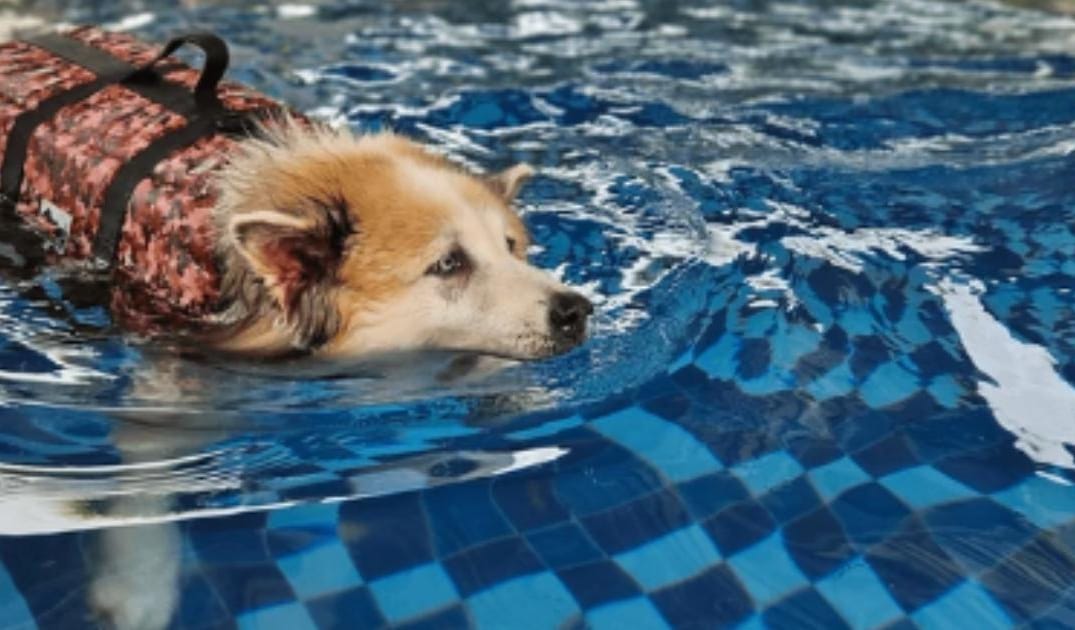
Swimming: A Joint-Friendly Option
Swimming or hydrotherapy is especially useful because it:
- Builds muscle without stressing joints
- Improves range of motion
- Reduces pain during movement
Veterinarians commonly recommend swimming as a safe exercise for senior dogs.
Gentle Strength Builders
Simple activities can help engage muscles:
- Slow incline walking
- Sit-to-stand repetitions (if pain-free)
- Controlled leash walking with slight resistance
Watch closely: If your dog limps, lags behind, or seems stiff afterward, the intensity is too high.
Nutrition: The Often Overlooked Piece
Exercise alone will not rebuild muscle. Nutrition plays an equally important role.
As dogs age:
- Their protein needs actually increase, even though calorie needs often decrease
- Muscle synthesis becomes less efficient
A veterinarian may recommend:
- High-quality, easily digestible protein
- Omega-3 fatty acids to support muscle health
- Joint-support nutrients like glucosamine
Do not change your dog’s diet drastically without guidance. Too much or too little protein can both cause problems depending on underlying health conditions.
Managing Pain to Unlock Strength
Pain is one of the biggest hidden barriers to muscle building.
A dog in discomfort will:
- Avoid movement
- Lose muscle faster
- Develop compensatory movement patterns
Treatments that may help include:
- Anti-inflammatory medications
- Joint supplements
- Physical therapy
When pain is controlled, dogs are far more willing to move, which directly supports muscle maintenance.
The Value of Physical Therapy and Rehab
For many senior dogs, especially those with significant muscle loss, structured rehabilitation can make a meaningful difference.
Options include:
- Underwater treadmill therapy
- Guided stretching
- Massage therapy
- Balance and coordination exercises
These therapies are increasingly used in veterinary medicine to improve mobility and quality of life.
However, research in canine rehabilitation is still evolving, and protocols can vary widely between clinics.
Small Daily Changes That Add Up
Muscle building does not only happen during “exercise time.” Daily habits matter.
Consider:
- Non-slip flooring to encourage movement
- Ramps instead of stairs
- Support harnesses for weak hind legs
Even small increases in safe movement throughout the day can help maintain muscle.
Tracking Progress Without Overdoing It
Progress in senior dogs is often subtle.
Look for:
- Easier transitions from lying to standing
- Slight increases in walk duration
- Improved posture or stability
Avoid focusing only on visible muscle size. Function and comfort are better indicators of success.
What Science Still Doesn’t Fully Know
While exercise and nutrition are widely accepted as beneficial, there are still gaps in research:
- No standardized exercise program exists for all senior dogs
- Optimal protein levels vary depending on health conditions
- Long-term outcomes of supplements are still being studied
Much of what we know comes from a combination of veterinary experience and human aging research, rather than large-scale canine-specific trials.
A Realistic Goal: Stronger, Not Younger
Helping a senior dog build muscle is not about reversing age. It is about improving:
- Stability
- Mobility
- Comfort
- Overall quality of life
With patience, consistency, and proper guidance, many older dogs can regain noticeable strength and confidence.
Always consult your dog’s veterinarian before starting any exercise or dietary changes. Every senior dog is different, and what works for one may not be safe for another.
Muscle loss may be part of aging, but decline does not have to be rapid or inevitable. With thoughtful care, your dog can stay active, engaged, and comfortable well into their later years.
Sources
- https://www.petmd.com/dog/condition/sarcopenia-in-dogs
- https://academy.royalcanin.com/en/veterinary/sarcopenia-and-weight-management-in-older-dogs
- https://pethealthmd.com/dogs/managing-muscle-loss-in-senior-dogs/
- https://outleash.com/muscle-loss-in-senior-dogs-strength/
- https://animalwellnessmagazine.com/muscle-health-senior-dogs/
- https://en.wikipedia.org/wiki/Sarcopenia
- https://en.wikipedia.org/wiki/Senior_dog_diet