
Table of Contents
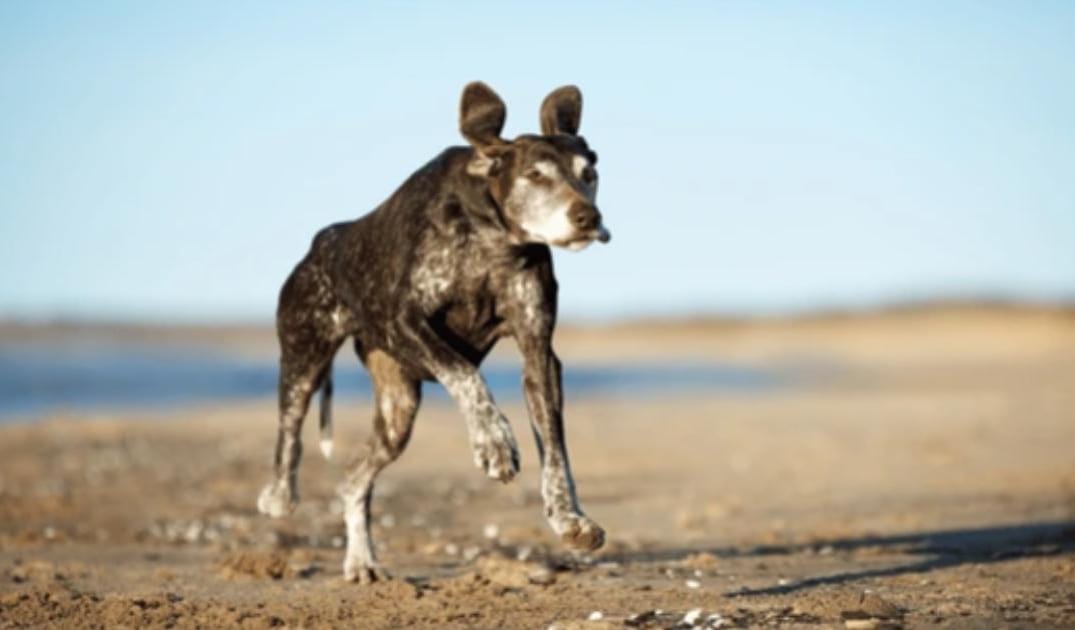
Watching your senior dog run should feel reassuring. So when their back legs suddenly move together in a “bunny hopping” motion, it can be confusing or even alarming. While this gait can sometimes look playful, in older dogs it often signals something deeper going on in the body.
Understanding what this movement means can help you respond early and support your dog’s comfort and mobility.
What “Bunny Hopping” Actually Means
“Bunny hopping” describes a gait where a dog moves both hind legs together instead of alternating them normally. It can look like a skip, hop, or stiff bounding motion.
This change in movement is usually not random. It is often your dog’s way of compensating for discomfort, weakness, or instability in the hips or hind legs.
In younger dogs, it might show up during bursts of excitement. But in senior dogs, it tends to be more consistent and tied to physical changes.
The Most Common Cause: Hip Dysplasia
The leading cause of bunny hopping in older dogs is hip dysplasia, a condition where the hip joint does not fit together properly.
Over time, this poor fit leads to:
- Joint instability
- Inflammation
- Progressive arthritis
As the condition worsens, dogs may change how they move to reduce pain. One of those adaptations is the bunny hop gait.
In fact, veterinary sources consistently list bunny hopping as a classic sign of hip dysplasia, especially when combined with stiffness or difficulty getting up.
Why it happens:
Moving both hind legs together reduces the range of motion in the hip joints, which can temporarily lessen discomfort.
Arthritis and Age-Related Joint Wear
Even if your dog was never diagnosed with hip dysplasia, aging alone can lead to osteoarthritis, especially in the hips.
As cartilage wears down over time:
- Joints become stiff and painful
- Movement becomes less fluid
- Dogs compensate with altered gaits
This can result in the same bunny hopping pattern seen in dysplasia cases.
Important: Many senior dogs actually have a combination of mild hip dysplasia and arthritis, even if it was never diagnosed earlier in life.
Muscle Loss and Weakness in Senior Dogs
As dogs age, they naturally lose muscle mass, particularly in the hind legs. This loss reduces joint stability and strength.
Without strong muscles supporting the hips:
- Movement becomes less controlled
- Dogs may avoid fully extending their legs
- A hopping motion becomes easier than a normal stride
This is one reason why a dog that moved normally for years may suddenly start bunny hopping in their senior stage.
Other Possible Causes (Less Common, But Important)
While hip and joint issues are the most likely culprits, other conditions can also cause this gait:
1. Injury or Trauma
Past injuries to ligaments, tendons, or bones can lead to long-term compensation patterns.
2. Patellar Luxation
A slipping kneecap can cause abnormal movement, though it is more common in smaller breeds.
3. Neurological Conditions
Issues affecting the spine or nerves can alter coordination and gait.
4. Pain Anywhere in the Hind End
Dogs sometimes change how they run simply to avoid pain, even if the source is not the hip itself.
When Is Bunny Hopping a Serious Concern?
Occasional hopping during play is usually harmless. But in a senior dog, consistent bunny hopping should not be ignored.
Watch for these warning signs:
- Difficulty getting up or lying down
- Reluctance to jump, climb stairs, or run
- Stiffness after rest
- Decreased activity or endurance
- Visible discomfort or limping
If you notice these alongside the hopping motion, it is more likely linked to joint disease or pain.
How Veterinarians Diagnose the Cause
A proper diagnosis typically involves:
- Physical examination of gait and joint movement
- Palpation of the hips and hind legs
- X-rays to assess joint structure and arthritis
Because multiple conditions can cause similar symptoms, imaging is often necessary to confirm what is happening internally.
Treatment and Management Options
While conditions like hip dysplasia and arthritis cannot be fully reversed, they can often be managed effectively.
Common approaches include:
Weight Management
Reducing excess weight lowers stress on joints.
Pain Management
Veterinarians may prescribe anti-inflammatory medications.
Controlled Exercise
Low-impact activities like walking or swimming help maintain muscle without overloading joints.
Physical Therapy
Strengthening muscles can improve stability and reduce abnormal gait patterns.
Joint Supplements
Some dogs benefit from supplements, though evidence varies and should be discussed with your vet.
The goal is not just mobility, but quality of life.
What Research Still Doesn’t Fully Explain
While hip dysplasia and arthritis are well-documented causes, there are still gaps in research:
- Not all dogs with these conditions show bunny hopping
- The exact biomechanics behind why some dogs adopt this gait more than others is still being studied
- Estimates (like how many dysplastic dogs bunny hop) vary across sources and are not always based on large-scale clinical trials
This means individual variation plays a big role, and your dog’s specific case matters more than general statistics.
When to Talk to Your Veterinarian
If your senior dog has started bunny hopping, especially if it is new or worsening, it is best to take it seriously.
Always consult your dog’s veterinarian for an accurate diagnosis and tailored treatment plan.
Early intervention can:
- Slow joint degeneration
- Reduce pain
- Help your dog stay active longer
A bunny hopping gait in a senior dog is rarely just a quirky habit. More often, it is a subtle signal that your dog is adapting to discomfort or physical change.
Paying attention to that signal, rather than dismissing it, can make a meaningful difference in your dog’s comfort and longevity.
Sources
- Merck Veterinary Manual: Hip Dysplasia in Dogs
- Cornell University College of Veterinary Medicine: Canine Hip Dysplasia
- Canines and Pups: Old Dog Hip Dysplasia
- Brown Veterinary Hospital: Signs of Hip Dysplasia in Dogs
- NAHF: Dog Bunny Hopping Gait Causes and Solutions
- PetsCare: Dog Bunny Hopping Causes and Care